Brobdingnag king's rejection of gunpowder
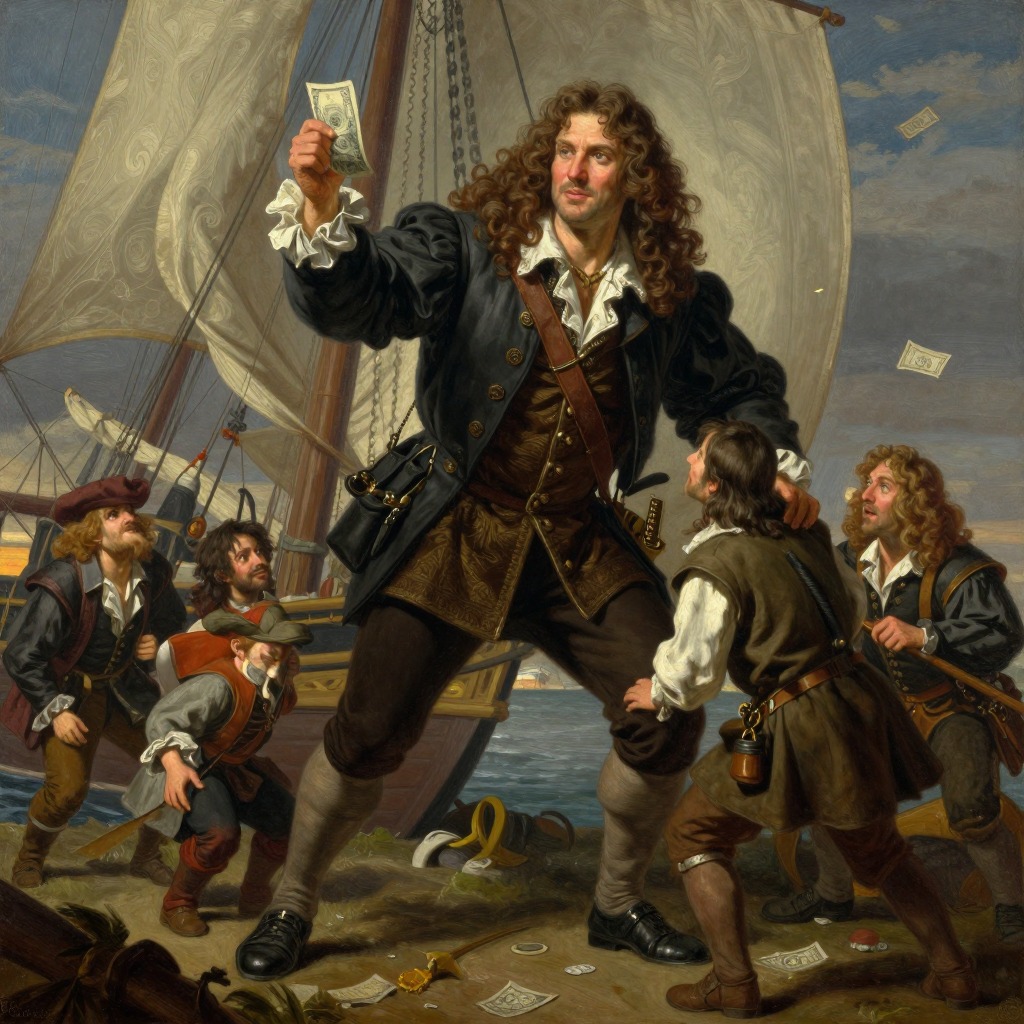
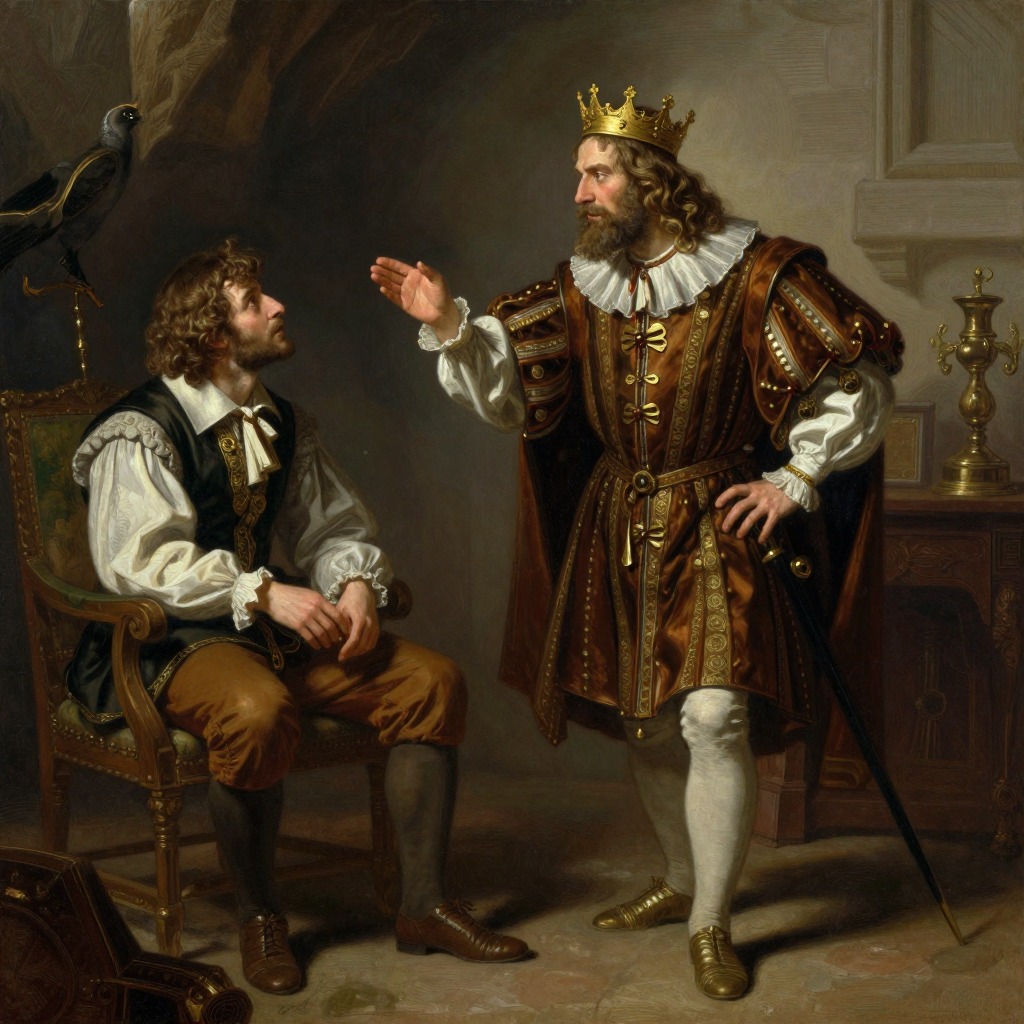
The Brobdingnag king's rejection of gunpowder is the most consequential moral and political moment in Gulliver's second voyage, a scene that crystallizes the entire satirical architecture of the book. After Gulliver has spent months at the Brobdingnag court, describing the institutions, wars, and technologies of Europe, he makes a proposal he expects will earn him lasting favor: he will reveal the secret of gunpowder and cannon, a discovery made in Europe three or four hundred years earlier. The king's horrified refusal—and his damning characterization of Gulliver as an 'impotent and grovelling insect' capable of 'inhuman ideas'—does not merely reject a weapon but repudiates the entire moral logic of European power. The episode transforms Gulliver from a would-be benefactor into a figure of shame, and it establishes the Brobdingnag king as the book's most powerful voice of ethical clarity, a ruler who would rather lose half his kingdom than be privy to such a secret.
The Proposal and Its Context
Gulliver's offer comes after a series of audiences in which he has given the king an extended, self-congratulatory account of English government, law, commerce, and military achievement. The king, a prince of 'excellent understanding,' has listened with attention, taken copious notes, and subjected every claim to skeptical scrutiny. He has already concluded that the bulk of European humanity is 'the most pernicious race of little odious vermin that nature ever suffered to crawl upon the surface of the earth.' It is against this backdrop that Gulliver, hoping to ingratiate himself further, describes an invention that he believes will demonstrate European superiority. He explains that a certain powder, when a spark falls upon it, will kindle instantly and explode with a noise and force greater than thunder; that this powder, rammed into hollow tubes of brass or iron, can drive a ball of iron or lead with such violence that nothing can withstand it; that such balls can destroy whole ranks of an army, batter the strongest walls to the ground, sink ships with a thousand men aboard, and, when linked by a chain, cut through masts and rigging, dividing hundreds of bodies in the middle. He adds that he knows the ingredients well—they are cheap and common—and that he can direct the king's workmen to make tubes proportionable to the scale of Brobdingnag, the largest need not be above a hundred feet long. Twenty or thirty such tubes, he promises, would batter down the walls of the strongest town in the kingdom in a few hours, or destroy the entire metropolis if it should ever dispute the king's absolute commands.
The King's Response: Horror and Moral Condemnation
The king's reaction is immediate and absolute. He is 'struck with horror' at the description and at the proposal itself. He expresses amazement that so 'impotent and grovelling an insect'—these are his exact words—could entertain such inhuman ideas, and in so familiar a manner, as to appear wholly unmoved at the scenes of blood and desolation Gulliver has painted as the common effects of these destructive machines. The king declares that some 'evil genius, enemy to mankind,' must have been the first contriver of such a device. As for himself, he protests that although few things delight him more than new discoveries in art or nature, he would rather lose half his kingdom than be privy to such a secret. He commands Gulliver, as he values his life, never to mention it again. The refusal is not a matter of military weakness or technological ignorance; it is a principled rejection of the entire enterprise of mechanized mass destruction.
Gulliver's Reaction and the Satirical Reversal
Gulliver, writing his narrative years later, still cannot fully absorb the meaning of the king's response. He dismisses it as a 'strange effect of narrow principles and short views,' complaining that a prince possessed of every quality that procures veneration, love, and esteem—strong parts, great wisdom, profound learning, admirable talents for government—should, from a 'nice unnecessary scruple' of which Europe can have no conception, let slip an opportunity that would have made him absolute master of the lives, liberties, and fortunes of his people. The satire works through this very blindness: Gulliver genuinely believes he has offered a great gift, and he cannot see that the king's refusal is not a defect but a triumph of moral intelligence. The reader is forced to choose between Gulliver's admiration for European 'progress' and the king's horrified clarity. The episode also echoes an earlier moment in the book: when Gulliver extinguished the fire in the Lilliputian empress's apartment by urinating on it, he performed a service that saved the palace but violated a fundamental law against touching the royal person, earning him the empress's undying enmity. In both cases, Gulliver's well-intentioned actions are met with revulsion, and in both cases the revulsion is justified by a moral code that Gulliver himself cannot comprehend.
The Brobdingnagian Alternative: A Society Without Gunpowder
The king's rejection of gunpowder is not an isolated act but the logical expression of Brobdingnagian civilization as a whole. The kingdom's laws are expressed in the most plain and simple terms, never exceeding the number of letters in their alphabet (twenty-two), and to write a commentary upon any law is a capital crime. Their learning is confined to morality, history, poetry, and mathematics, and the last of these is applied wholly to what may be useful in life—the improvement of agriculture and all mechanical arts. The king himself has told Gulliver that he confines the knowledge of governing within very narrow bounds: common sense and reason, justice and lenity, the speedy determination of civil and criminal causes. He has given it as his opinion that whoever could make two ears of corn or two blades of grass grow upon a spot where only one grew before would deserve better of mankind and do more essential service to his country than the whole race of politicians put together. The Brobdingnag military, such as it is, consists of a militia of tradesmen and farmers commanded by the nobility and gentry without pay or reward, and the king's stables hold no more than six hundred horses. The rejection of gunpowder is thus the negative image of a positive ideal: a society that values agricultural improvement over military conquest, simplicity over complexity, and moral clarity over technical sophistication. The king's horror at Gulliver's proposal is the horror of a man who sees, in a single invention, the destruction of everything his civilization has built.
Thematic Significance: The Critique of European 'Progress'
The gunpowder episode is the climax of the Brobdingnag section's sustained critique of European civilization. Throughout his conversations with the king, Gulliver has presented England as the mistress of arts and arms, the scourge of France, the arbitress of Europe, the seat of virtue, piety, honor, and truth. The king has responded by sifting every claim and finding it hollow. The gunpowder proposal is the final test, and Gulliver fails it utterly. The king's refusal exposes the moral bankruptcy at the heart of European technological 'progress': the same ingenuity that can produce a beautiful machine can also produce a machine for mass murder, and the European mind, as Gulliver demonstrates, has learned to contemplate that murder with equanimity. The episode also completes the reversal of perspective that structures the entire voyage. In Lilliput, Gulliver was a giant among pygmies, and his size gave him power; in Brobdingnag, he is a pygmy among giants, and his smallness exposes the pettiness of his values. The king's rejection of gunpowder is the moment when the moral scale of the two worlds is most starkly weighed, and Europe is found wanting. Gulliver's own narrative, which he intends as a record of his adventures, becomes instead an indictment of the civilization he represents, and the king's words echo long after the voyage is over, challenging every assumption about progress, power, and humanity that Gulliver—and the reader—brought to the book.